The time had come for me to leave Washington, NC. The last of the three months I had paid for was almost up and Mollynogger’s hull had just been cleaned by Josh of Castaway Dive Service. There was likely a little wiggle room for me to bargain for a couple days and better weather, but I was compelled to go. Mid morning on that last September Wednesday, I untied the lines with the help of Keith and Marianne, Donald, Donald’s friend Bob (I think), and Steve. It wasn’t perfect, but my planned maneuver was largely successful. Donald and Bob, the Navy contingent, seemed to approve.
The spot where Molly had been tied up was not necessarily tight or difficult but it required some planning. She was facing the shore along a face dock with two boats relatively close fore and aft. We needed to get off the dock, clear the other boats, and turn around almost 180 degrees to head out into the river. I had lead a spring line from the outside stern cleat, to the dock, and back aboard. On my signal, the crew untied the last couple dock lines and pushed Molly’s bow away. After the bowsprit was past David’s trawler ahead, I put her in forward and we began to pull on the spring line. I didn’t let out quite enough line and as Molly began her turn, the dinghy was brushing the dock pylons. But with a little more slack and Molly gurgling forward at idle speed, we pulled the spring line taut and her bow began to arc out toward the river. Once I could aim her toward clear water, I let the spring line go and pulled it off the pylon and back aboard. We were off.
The wind was on our nose, of course, as we headed down the Pamlico River.
And that’s when we had our first little drama. I was on alert because I smelled something hot. It had been literally three months since I had been underway with Molly, and I wasn’t used to her sounds and smells. I had to wonder if it was my imagination or something real. Twice in the first five miles, I stopped, dropped the anchor, and checked on the engine. I’m not a very confident diesel mechanic but the engine was not running hot, and the oil was fine. The reservoir seemed to have more fluid in it than I remember and it was spitting some fluid that managed to hit the side of the engine. Hence, the hot smell. I jury-rigged a hose to direct the overflow into the bilge. All else seemed normal.
Keith had texted me to ask how it was going. I gave a brief description of my steam trouble and he reminded me to check that the radiator cap was not leaking. I made a mental note and decided to keep moving.
I motored down the Pamlico to where the ICW cuts across at Goose Creek. I had picked out an anchorage just inside the creek, but once I arrived there were too many houses close by. I continued on to the next anchorage on the chart and what an auspicious choice that turned out to be.
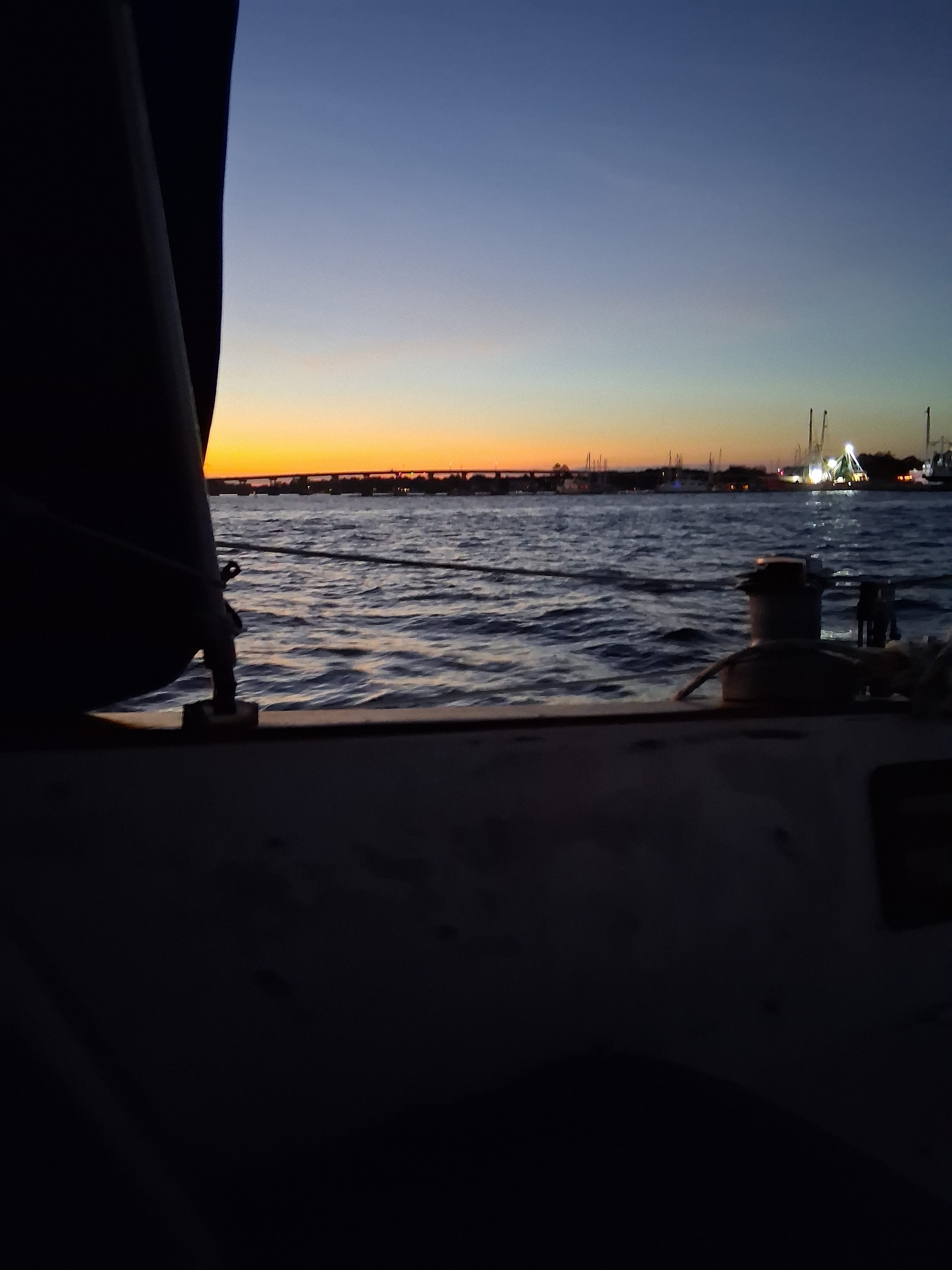
The sun was setting as I ghosted into Campbell Creek. Pink and yellow colors began to wash over the horizon and a large pod of dolphins was feeding. I seemed to have been surrounded by a buffet. Scattered about as I dropped the anchor, a fin would surface, and after a gasp of air, the rounded back of a dolphin would roll underwater again. It was hard to count them because they were scattered around the creek and never surfaced at the same time, but there must have been at least eight dolphins greeting me as I anchored. After making some supper, I spent time in the cockpit watching the sky darken and the stars emerge. It doesn’t get any better.
The forecast had called for better wind along my route the next afternoon, so I slept in a little. I checked the engine and its fluids. I removed the radiator cap and restored it with deliberate care. I hauled the anchor and gurgled back out into the ICW. A guy in a kayak didn’t seem to answer when I had called “Good Morning” to him, so that’s on his karma not mine. The R. E. Mayo Seafood Company docks have always intrigued me but it was too early to stop. Just past their big offshore boats and facility is the Gale Creek anchorage where I had spent the night three months before on the way up to Washington.
Mollynogger and I finally made it into the Bay River. We were back in more open water, but the wind was still on our nose. My haulout was scheduled for two weeks hence … and … the Ol’ Front Porch Music Festival was about to happen in Oriental. So, we turned down the Bay River rather than up. But that was the plan. A sailboat and a tug pushing a barge passed us on our way toward the Neuse River.
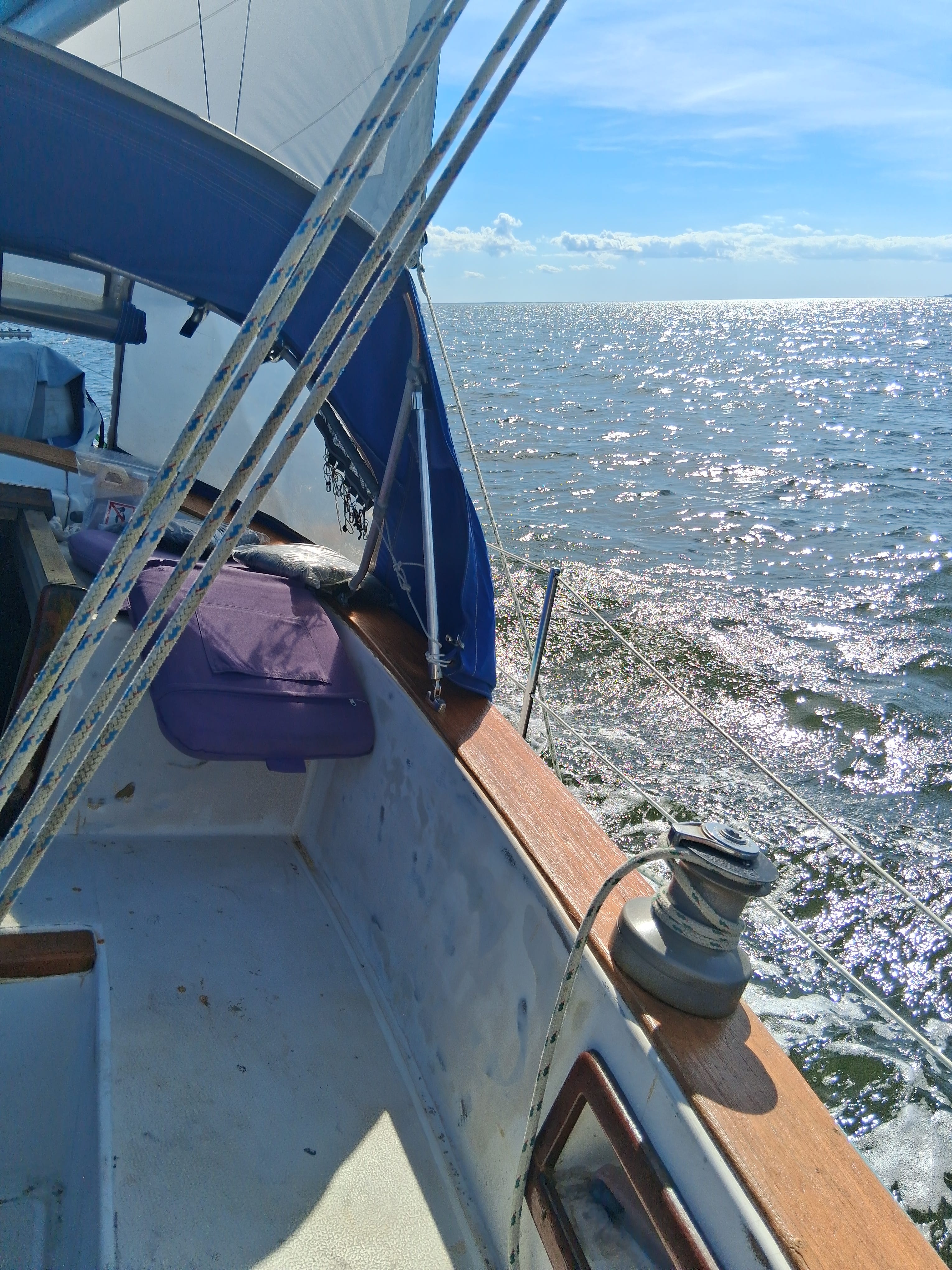
The Bay and Neuse Rivers join the Pamlico Sound almost together and there is always a lot of wind and water. I picked a spot where Molly could safely drift around, dropped her into neutral, and went forward to raise the main. Back at the helm, I set the sheet and we began to sail. After organizing the lines in the cockpit, I unfurled the genoa. We had just enough room to sail close-hauled down the edge of the Bay River and into the Neuse. Molly hitched her skirts and was snorting as she ran toward the wind.
As we entered the Neuse, we fell off into a beam reach across the wind. Molly and I were both elated and relished in sailing again. It was some of the best sailing we had done together yet. We charged across the waves, keeping the bow pointed tightly parallel across the northern shore of the river. The sky was clear except for the occasional big puffy clouds. The water was a deep blue grey with little bits of white cap scattered across the wide river. I’ve never had an anemometer before. I knew that the scattered white caps meant a nice moderate wind. Molly’s anemometer told me our breeze was holding consistently just below 15 knots. It was glorious sailing.
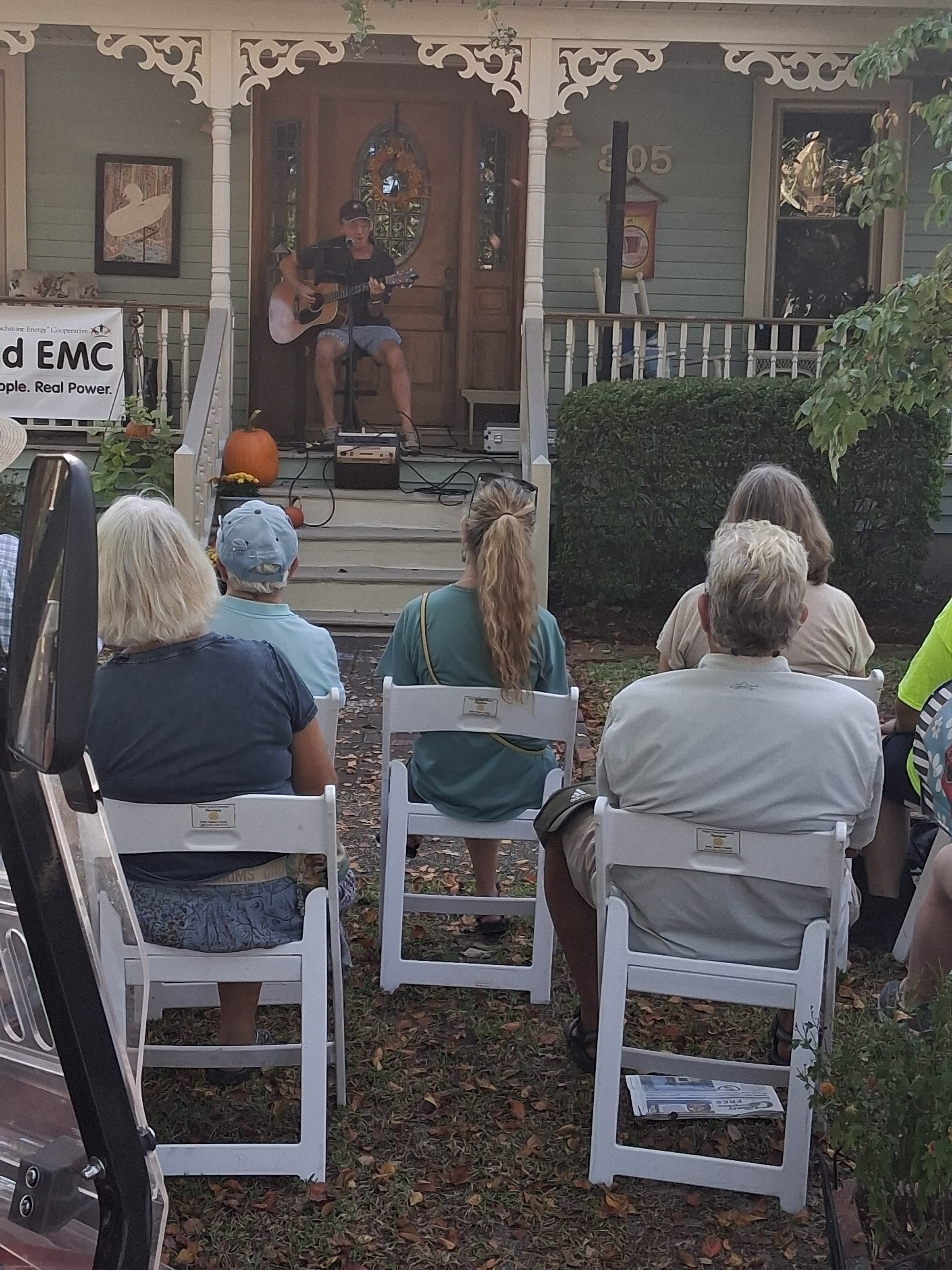
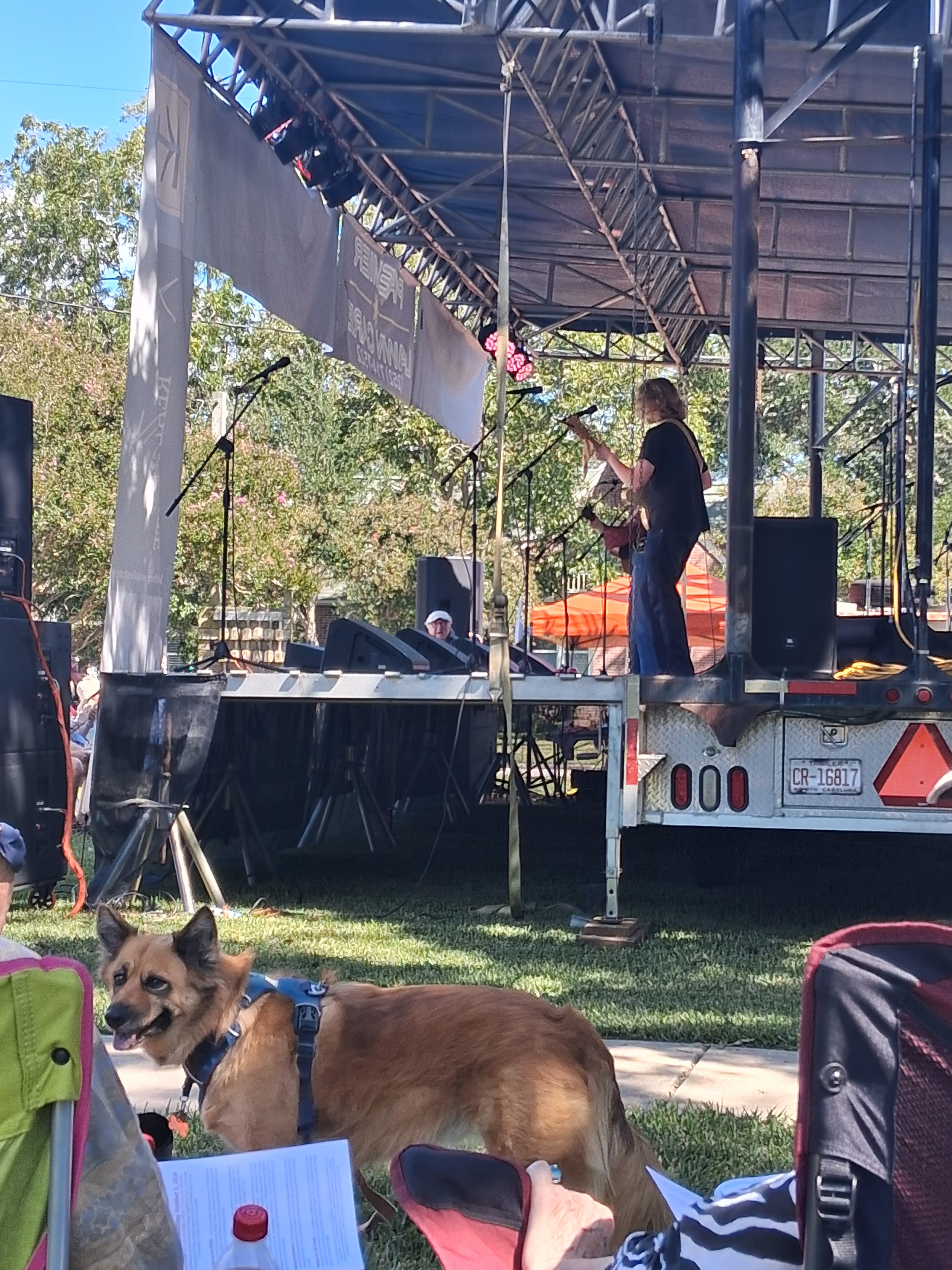
I had a couple weeks before I was scheduled to haulout at Hurricane Boatyard. My plan was to stop in at Oriental for a couple days to enjoy the Ol’ Front Porch Music Festival. I had been there a few years ago. It is amazing that a village of less than a thousand residents can organize and hold a two day free music festival every year. And they do it very well.
Oriental is also a Mecca for sailors. They say that there are more circumnavigators there per square mile than anywhere in the country. As I got closer my sailor brain was churning. It was a damn fine day for sailing and the wind direction was entirely in my favor. To this vagabond sailor, you just don’t motor into Oriental unless you absolutely have to. Once I could see the Smith Creek light pylon, I knew that I could sail right in and anchor without turning the engine back on.
I checked my surroundings and there was another sailboat close behind me. I turned Molly up into the wind to let them by as I furled the genoa. We spun around and pointed the bow toward the Oriental jetty. Now there is an inside anchorage and a couple free docks all the way into the harbor. Past experience told me that the anchorage was always crowded. And since I was still getting used to Molly, who is eight feet longer and almost three times as heavy as Ruth Ann was, I didn’t want to try to maneuver into the harbor, but especially not try to work my way back out.
I watched the depth sounder and the chartplotter as we ghosted into the outside anchorage. We probably could have gotten a little closer but I had been here a couple times and had some knowledge of the bottom and the depths. I chose a spot, sailed a little inside of it, and then turned Molly up into the wind. After uncleating the mainsheet, I walked briskly to the bow to drop the anchor. The main was flogging free in the wind as the 65 pound Mantus spade anchor bit the muddy bottom and we had arrived. The sun dipped below the trees ashore as I dropped the main and zipped it up in the beautiful stack pack that Allison had made. I tidied up the lines, covered the chartplotter and the compass, and then made myself a drink.
I had been watching the forecast for Oriental. The previous week, I wasn’t sure I’d be able to stop there, but the weather had softened in my favor. The outside anchorage was wide open to the wind and waves of the wide Neuse River, but I had a couple days reprieve in the weather or so it seemed.